Big Tech or a Startup? An AI PhD Keeps Swinging
DJI headquarters still keeps a video: before the final began, both teams shouted the same school motto. One side was Harbin Institute of Technology’s main campus; the other, its Shenzhen campus. The freshman on the Shenzhen team is now an AI PhD. He says the big returns all live in uncertain things.
DJI headquarters still keeps a video. In it, the match has not started yet. The players from both finalist teams pour onto the field together and shout their school motto in unison: strict in standards, thorough in craft. On one side of the chant is Harbin Institute of Technology’s main campus. On the other, its Shenzhen campus.
On the Shenzhen team that day was a freshman. I call him Simon.
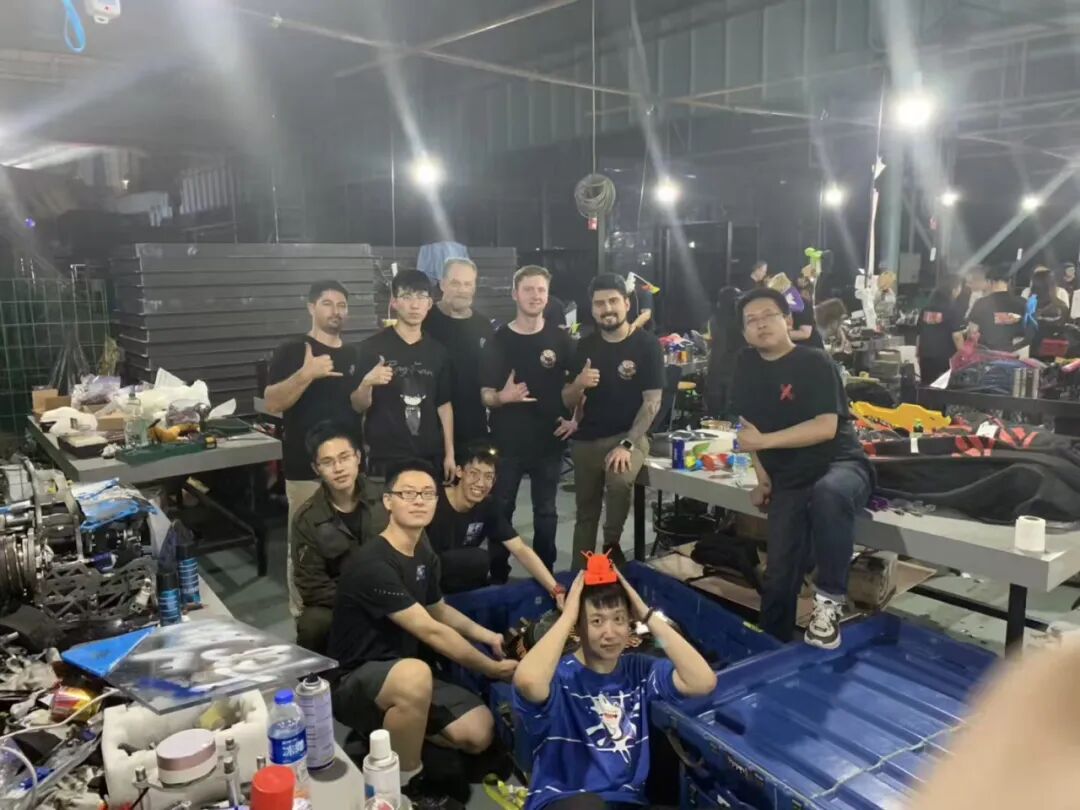
Simon was an undergraduate at HIT Shenzhen. The undergraduate program had just been founded, and everything was still being built from scratch; the campus was so small that a twenty-minute morning jog took you all the way around it. The robotics team started from nothing too. In the years before, it had never even made it out of the provincial round. The year Simon joined, they reached the national tournament, and their opponent in the final was the main campus. For that match, he lived at the team room seven days a week, a hundred hours.
I asked him how it felt at the time.
“It was thrilling back then. But if it were now, I’m not sure I would do it again. It was a team nobody believed in, and it ate up a huge amount of time. And your freshman-year GPA really matters. But I don’t regret it. You can always grind your GPA back later; a group of people going all in on the same goal, that only happened once.”
His introduction to research was the school’s freshman project program, where undergraduates start doing research from year one. “As a kid I thought research was this lofty, glamorous thing. Once I actually did it, the mystique wore off.”
He entered the field in his sophomore year and went all the way to a PhD. Simon now works on multimodal vision language models. Because his work is strong, he has interned at quite a few big tech AI labs, where he saw research that serves the business, research that serves a vision, and research that serves the boss. In one team, the core goal was not pushing the model’s intelligence ceiling higher; it was figuring out what kind of KPI the boss liked, to help with one’s own promotion.
Simon understood it, too: “Under the real conditions at the time, it was genuinely hard to build a killer model. Not enough compute, not enough budget, and the competitors were too strong.”
His deskmate in the PhD program did research on one side and studied investing on the other. Last year, he walked Simon through Intel’s stock: the company’s cash flow was greater than its share price, and with America pushing to bring manufacturing back home, this was a company the country had to prop up. Simon didn’t take it to heart. Intel then climbed from last year’s low of 22 dollars to this year’s high of 130. The deskmate reached financial freedom.
Simon used to be someone who only did things with certain outcomes. “Later I found out the big returns all live in uncertain things.”
This time we talked about startups, about turning research into products. On AI hype waves, his view was interesting: “Since 2023, there has been one hot thing in the first half of basically every year. 2023 was ChatGPT, 2024 was multimodal, 2025 was DeepSeek R1, 2026 is OpenClaw.” The arrival of OpenClaw, plus the popularity of Codex and Claude Code, has turned selling tokens into a sexy business.
I asked him: what will the hot thing of 2027 be? World models? Physical AI?
“None of the concepts that blew up ever showed themselves half a year in advance. They all came out of nowhere. World models and physical AI have been around as concepts for quite a while, but nothing much seems to have come of them. They are genuinely hard to pull off. They need more time.”
He went on: “Once AI gets much stronger, maybe today’s research scientists will become AI output checkers. You hire a person to be accountable for what the AI produces.”
At the end, I asked whether he had thought about a startup direction.
“I think technology by itself is not a moat. The best play is a niche but critical track. I just haven’t found it yet.”
“Maybe I’ll have figured it out by the time I graduate.”