Xiangpeng Wan

100 Conversations: I am talking to 100 people about how they build, work and think in the age of AI.

Latest Posts

Saudi Clients Only Bought Software From Indians, Until AI Came Along

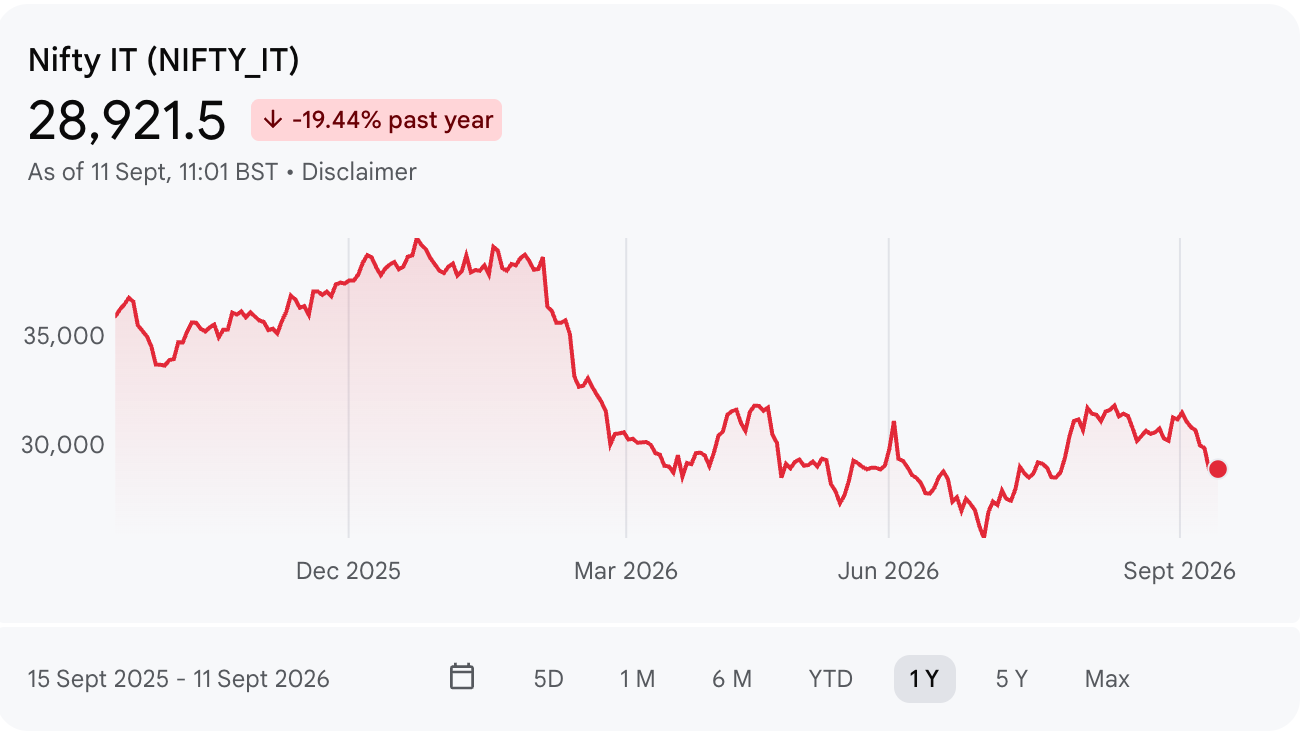
A client from a Saudi company heard Matteo out and told him his product wouldn't sell well in Saudi, because he is Italian. IT used to be expensive, software from Indian companies was cheap, and even when it wasn't good, companies bought it anyway. Once AI lowered the barrier to building software, that default started to loosen: in March 2026 India's Nifty IT index fell from 26,000 points to 22,000. More people are building software, the number of corporate buyers hasn't grown, and so sales matters more than it used to. Matteo explains how he does business in Saudi, and how PwC lost the Saudi government.

Saudi Clients Only Bought Software From Indians, Until AI Came Along

A Teacher to Her Students, a Vendor to Her Clients

Zi is doing a PhD at a top UK art school. On the side she helps children from high-net-worth families apply to art schools, and every client comes by word of mouth. She tried moving the business onto Xiaohongshu and found it doesn't work: once the amount gets large, deals stop closing. At the same time she is building an AI art-toy startup in China, where she raised her first round last year and watched agreed budgets get cut on a client's word. In the UK she is a teacher; back in China she is the vendor. The thesis sits between the two, still unfinished.

A Teacher to Her Students, a Vendor to Her Clients

She Works in VC, and She Says VC Has No Money

I went to see Amy in London to look for room to work together. She said a service like AI transformation doesn't suit VCs: too many people there come from technical backgrounds and prefer to do everything themselves. And more importantly, VC has no money. A 2% management fee has to keep the whole firm running, the LPs see a principal of a million and expect 1.4 million, while the GP actually holds only eight hundred thousand. She studied finance, not programming, yet Claude Code runs on her computer every day.

She Works in VC, and She Says VC Has No Money

Claude Code and Codex Played 8 Rounds of Negotiation. Codex Attached a Gift to Every Refusal

Two coding agents sat down for 8 rounds of a Harvard-style negotiation competition, scored on hard numbers. The result was 7 to 1. Codex lost the same way every time: in 4 games it signed deals sitting exactly on its client's survival line with zero margin; three times it refused the other side and volunteered a concession in the same breath; whenever the opponent told a story, it gave ground. It lost because it wanted too badly to be a good assistant.

Claude Code and Codex Played 8 Rounds of Negotiation. Codex Attached a Gift to Every Refusal

His Supervisor Can't Afford a House in London Either

Heng asked his supervisor whether he could buy a house in central London. The answer was no. In that moment, something clicked. Heng works on fuel cells: fuel goes in, electricity comes out, and over a PhD and a postdoc he built the whole process from scratch. In academia, what gets judged is whether you can bring in money, and money comes from networking; the UK pie is only so big. So he decided to start a company, and to do it back in China.

His Supervisor Can't Afford a House in London Either

The Money European Companies Pay American Firms Every Year Is the Opportunity for Founders Going Abroad

When a Chinese company first came to London to build an enterprise business, it hired a batch of local salespeople for the relationships they held. It didn't amount to much, and the hires were let go one after another. The real turning point was a model release: the model broke into the mainstream, and companies large and small came to them asking about partnerships. "The market here in Europe isn't entirely relationship-driven; it's more value-driven," said a friend who works on enterprise clients at a big tech company. Europe has plenty of traditional enterprises that, for reasons of technology and talent, have long been buyers of services, paying American tech companies a large sum every year. Anthropic built a major office in London, and the French model company Mistral pivoted to enterprise and government clients and grew revenue nearly twentyfold in a year; they all came for this business. His advice to me was just one line: first build a product or feature that can break through, then go after enterprise clients. It will be much easier.

The Money European Companies Pay American Firms Every Year Is the Opportunity for Founders Going Abroad

After Ten Years at Google, He Decided to Go Start Something

Huang graduated from Peking University in 2014 and joined Google, landing in London because of visa timing. It was the golden age of big-tech food: sushi every day in the cafeteria, and grilled steak, pork chops, and lamb chops in the evening, sometimes even venison. Ten years later he left and started a company. The first direction was an AI version of TikTok, with everything generated by AI; they worked on it for a while and gave up, because they didn't believe anyone would actually use it. Then in early 2026 a product called moltbook had its moment doing the same thing. The team is small now: after AI arrived, the company trimmed a lot of people, interns especially, because if someone can't own a piece of work end to end, the friction of communicating with them isn't worth it compared to just using AI. When I asked him what mattered most in two years of building, he said it's the team's end-to-end response speed: find a problem in the morning, propose a fix at noon, ship it in the afternoon, then immediately collect real user feedback, a full product loop closed in a single day.

After Ten Years at Google, He Decided to Go Start Something

KPMG Cut Four Hundred Assistant Managers. Amy Decided to Become the Auditor Who Works Best with AI

A text-based reconciliation used to take Amy three days; Excel couldn't handle it, so someone had to check it line by line. This year the job went to the company's Copilot: ten minutes to finish, plus an hour of her review. KPMG next door cut four hundred assistant managers this year, and senior leadership said in a meeting that by 2030 all workpapers and testing will be done by AI, with junior staff becoming AI operators. Amy doesn't think this is all bad news: feeling the pressure is a good thing; what's truly bad is a company that isn't using AI at all, leaving you to repeat the same work day after day. Her advice to herself: stay at the table, and become the employee in audit and compliance who collaborates with AI best.

KPMG Cut Four Hundred Assistant Managers. Amy Decided to Become the Auditor Who Works Best with AI

Salesforce Offered Him Another 150k to Stay. He Said: This Is Not My Ceiling

The day he left Salesforce, the company offered Zheng Qian another 150k raise to keep him. He left anyway, saying the salary was about as high as it goes in London, but that was not his ceiling. Born in 1995, he is building a new company with the same engineers who were acquired alongside him: the market said no to his product twice, and he added one layer, then another, before customers finally paid. Emails converted at nearly zero, so he hired people to make ten thousand cold calls. His outsourced sales team was so won over by the vision that they took pay cuts to join. Ideas, he says, rank behind conviction and team; a brilliant idea is not the starting point of a startup, it is a byproduct.

Salesforce Offered Him Another 150k to Stay. He Said: This Is Not My Ceiling