Salesforce Offered Him Another 150k to Stay. He Said: This Is Not My Ceiling
The day he left Salesforce, the company offered Zheng Qian another 150k raise to keep him. He left anyway: “This salary is about as high as it goes in London, but I don’t think this is my ceiling.” Born in 1995, he is building a new company with the same engineers who were acquired alongside him: the market said no to his product twice, and he added one layer, then another, before customers finally paid. Emails converted at nearly zero, so he hired people to make ten thousand cold calls. His outsourced sales team was so won over by the vision that they took pay cuts to join. Ideas, he says, rank behind conviction and team; a brilliant idea is not the starting point of a startup, it is a byproduct.
A brilliant idea is not the starting point of a startup. It is a byproduct.
Zheng Qian was born in 1995. He is building his company in London as CTO, helping traditional enterprises with AI transformation. The day he left Salesforce, the company offered him another 150k raise to keep him. He left anyway.
“This salary is about as high as it goes in London,” he said. “But I don’t think this is my ceiling.”
Before Salesforce, he was the engineering lead at a startup. The product did well, and Salesforce bought the entire team; that is how he became a Salesforce employee. The engineers building the new company with him now are those same colleagues.
I asked him why he thought he was suited for founding a company. He gave two reasons: he understands technology, and he knows how to talk to people.
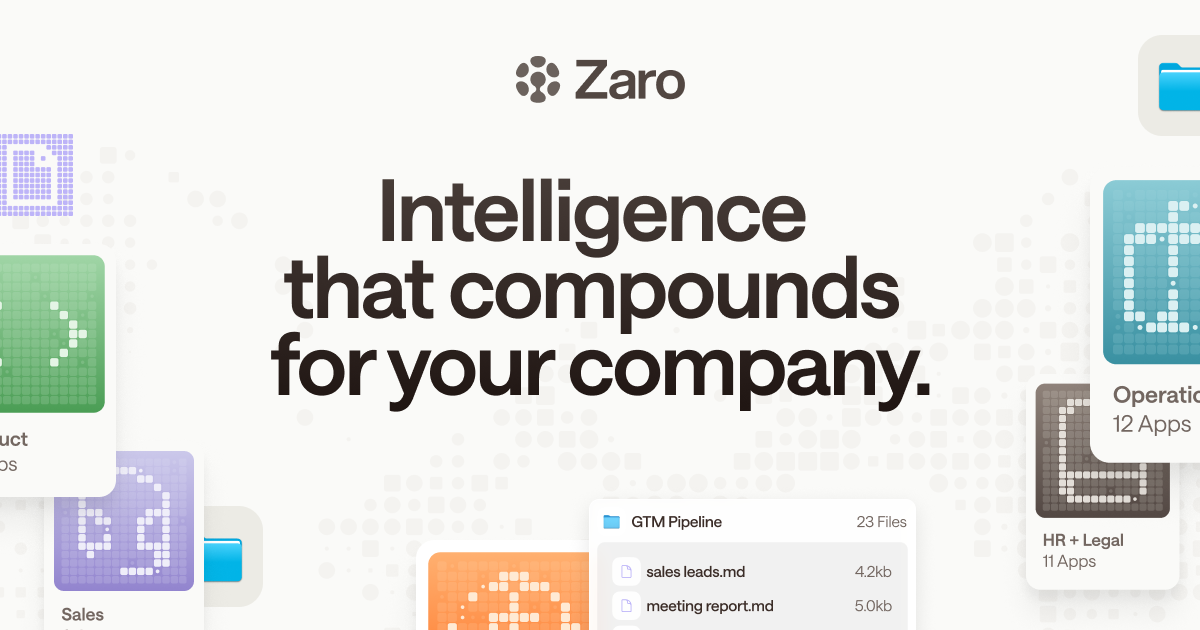
When he first started, his idea was this: in the AI era, data matters most, so he would build the cloud data layer, the piece of infrastructure that stores and manages all of a company’s data. Inspired by Claude Code, he built this data layer as a file system that is easy for AI to read: unstructured data becomes Markdown documents, structured data becomes tables, and almost all data can be mapped in. And because it is a file system, permissions can be drawn along files and folders, making it easy to manage what each person in the company, and their AI agents, can read and write.
The first version of the product came together quickly. Then the market started saying no.
The first time, he positioned the product as agentic BI: AI agents automatically pull data, run analysis, and produce reports, taking over all the data work people used to do. Essentially an AI version of Snowflake. Once it was built, he found it hard to sell: very few companies have an agent layer today, and some don’t even have a cloud data layer.
So he added an agent layer on top, configuring AI agents for customers directly. Still hard to sell. Only after talking with customers did he learn why: companies were not comfortable letting employees use AI this way. What are employees actually doing with these agents? Are there operations that break the rules? If something goes wrong, can it be traced?
So he added yet another layer: governance and auditing. It manages who can do what and records every operation, making everything traceable. Now customers are paying.
The target customer changed once too. He originally wanted to sell to AI startups, but conversation after conversation showed these people generally would not buy; they would rather build it themselves, even if they could not pull it off in the short term. So he turned around and went after traditional enterprises.
Traditional enterprises don’t read email. The emails they sent out converted at almost exactly zero. What actually brought in customers was the phone: he hired people specifically for this, trained them, and had them call, one call at a time. Roughly ten thousand calls later, they had a number of partner companies.
There is a funny side story. His sales team was originally outsourced. Somewhere along the way, the whole group was won over by the product and the vision, took pay cuts, and joined them. In Zheng Qian’s words, this amounted to acquiring an entire sales team by other means.
The first round of funding brought in five million. “Raising money is really just one big networking scene. Investors need to know who I am and who knows me. Then they call an investor who knows me: oh, it’s him, he’s really good. And then they invest.”
Back then his mindset was that of a game: when the money runs out, the game ends.
Now the product has been running for three months. His own company uses it, his investors’ firms use it, and his B2B customers’ companies use it, with essentially no bugs that affect the experience. His investors say it is among the most promising projects in their portfolio and want them to move fast.
The pressure has actually grown. Before, the game could be played any way at all; now that he can see a chance of winning, every move has become important.
I asked him what he thought matters most in a founder.
First, he said, is conviction in yourself: believe in yourself, firmly. Second is the team: “The two engineers at our company right now are the best engineers in the world.” The idea ranks behind those two. “I don’t hold strong conviction about the idea itself; it keeps evolving as the company and the market evolve. But I have strong conviction in myself and in the team, and I believe the product we build will succeed in the end.”
Toward the end of our conversation, Zheng Qian opened his own product. The team’s daily work happens inside this software; sales, website, users, all the data flows into the data layer. On the screen hung a dozen or so scheduled jobs, each running once a day, each doing its own analysis, and the company adjusts its strategy based on the results. If there is a question, just ask the AI, and it goes to the data layer on its own to pull data, draw charts, and execute.
I said: the way you work is very AI native.
He said: I think this is how other companies will work in the future too.