The Money European Companies Pay American Firms Every Year Is the Opportunity for Founders Going Abroad
When a Chinese company first came to London to build an enterprise business, it hired a batch of local salespeople for the relationships they held. It didn’t amount to much, and the hires were let go one after another. The real turning point was a model release: the model broke into the mainstream, and companies large and small came to them asking about partnerships. “The market here in Europe isn’t entirely relationship-driven; it’s more value-driven,” said a friend who works on enterprise clients at a big tech company. Europe has plenty of traditional enterprises that, for reasons of technology and talent, have long been buyers of services, paying American tech companies a large sum every year. Anthropic built a major office in London, and the French model company Mistral pivoted to enterprise and government clients and grew revenue nearly twentyfold in a year; they all came for this business. His advice to me was just one line: first build a product or feature that can break through, then go after enterprise clients. It will be much easier.
A Chinese company expanding overseas once hired a batch of local salespeople in London, for the relationships they held. Those people were all later let go.
The other day I was chatting with a friend. He works on enterprise clients at a big tech company. I mentioned that in our work helping enterprise clients with AI transformation, the hardest part isn’t doing the work; it’s getting the meeting. Without an existing relationship, many potential clients simply won’t give us a chance.
He told me the story of that company. When they first came to London to build an enterprise business, they hired a lot of local people to run sales, trusting exactly the relationships those people brought. It didn’t amount to much, and the hires were let go one after another. The real turning point was a model release. The model broke into the mainstream, and companies large and small turned around and came to them, asking about partnerships.
“The market here in Europe isn’t entirely relationship-driven; it’s more value-driven,” he said. Plenty of his own clients came the same way: many companies were willing to work with them because their cloud service was mature enough.
I quite agree with this. A breakout product really can open doors that wouldn’t open otherwise.
He also reminded me, though, that enterprise sales cycles are long; they take patience and sustained cultivation. And in investment terms it’s not as sexy as consumer products. But once you walk this road through, the payoff is real. “A lot of the famous tech companies today are built on serving enterprise clients. Snowflake, Databricks, Anthropic, Salesforce, Microsoft,” he said. “I’d really like to see companies like that come out of China too.”
It’s not that he’s pessimistic about consumer startups; it’s just that his work and his expertise are both in enterprise, so that’s the side he knows better.
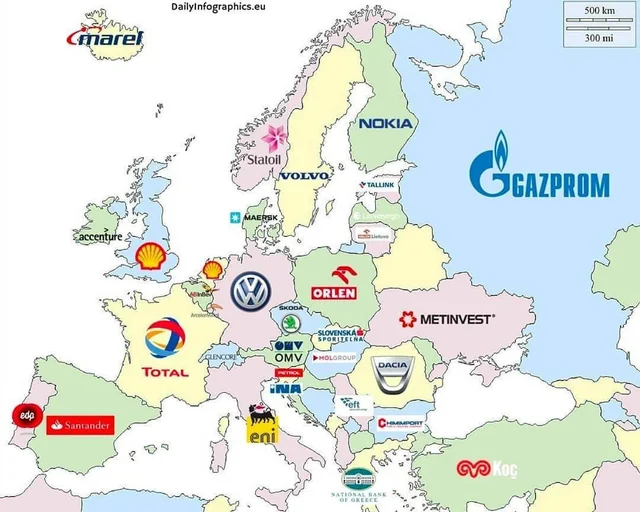
The Chinese circle in London is small, and anyone doing enterprise services can’t avoid local companies. The good news is that Europe has plenty of traditional enterprises which, for reasons of technology and talent, have mostly been long-time buyers of services, paying American tech companies a large sum every year. Anthropic built a major office in London, and the French model company Mistral also pivoted to enterprise and government clients, growing revenue nearly twentyfold in a single year; they all came for this business. That is also the opportunity of building in London: the competition is a bit lighter than in Silicon Valley.
So his advice to me was just one line: first build a product or feature that can break through, then go after enterprise clients. It will be much easier.