Saudi Clients Only Bought Software From Indians, Until AI Came Along
“Everyone buys Indians in Saudi.”
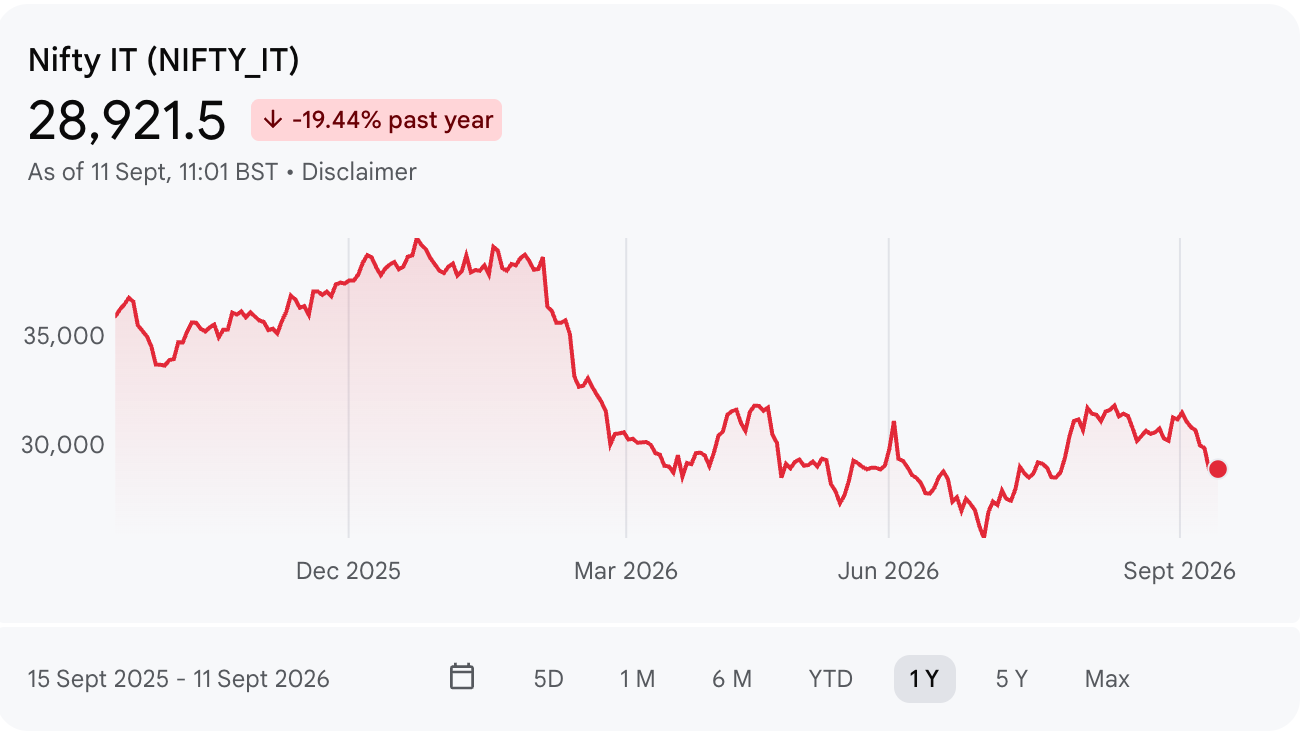
In the past IT was expensive. Software from Indian companies was cheap, and even if it wasn’t good, companies bought it anyway. Once AI brought down the cost and the barrier to building software, this default option started to loosen. In March 2026, India’s Nifty IT index fell from a high of 26,000 points to 22,000.
There are more people building software, and they build it faster, but the number of corporate buyers hasn’t grown.
In 2018 Saudi Arabia set out to build that city of the future. They hired PwC as consultants, then broke ground. In recent years the government hasn’t mentioned the project much, because it’s very hard to pull off. PwC never flagged this risk, from beginning to end.
“Because what we sell is expensive, preparation matters more than volume.”
Matteo remembers that meeting. Across the table was a client from a Saudi company. After hearing his pitch, the man said: your product won’t sell well in Saudi. Because you’re Italian. “Everyone buys Indians in Saudi.”
He told me this as an anecdote. I do AI transformation for companies in London, a similar line of business. In the past IT was expensive. Software from Indian companies was cheap, and even if it wasn’t good, companies bought it anyway.
Once AI brought down the cost and the barrier to building software, this default option started to loosen. In March 2026, India’s Nifty IT index fell from a high of 26,000 points to 22,000. And from here on, every company can have its own software.
Matteo’s view is that in the AI era, sales matters more than it used to. I agree. There are more people building software, and they build it faster, but the number of corporate buyers hasn’t grown.
Matteo is Italian and started working at 18. That same year he also sat the exam for the economics program at Bocconi University. Bocconi is one of the best private schools in Italy. Many of the Italians in London’s investment banks came out of there. He got in, but he didn’t go. After that he changed jobs many times, got a pilot’s license, and most of what he did was in openings of hotels and hospitality focused companies in general. Later a company sent him to Saudi Arabia.
Now he has registered his first company in London, doing consulting and software, with clients including European companies in Saudi. It started as a side business and became his main job because he enjoyed it. This time he works the front office: finding clients, negotiating sales, maintaining corporate relationships.
Matteo says building trust in Saudi is a little different from elsewhere. It takes a lot of effort to build, but once it’s built, it lasts a long time.
He shared another story. In 2018 Saudi Arabia set out to build that city of the future. They hired PwC as consultants, then broke ground. In recent years the government hasn’t mentioned the project much, because it’s very hard to pull off. PwC never flagged this risk, from beginning to end. Later Saudi stopped letting PwC take part in work with the government.
I asked him: how do you build relationships with corporate clients?
He said: phone calls have always been the most effective, but only if you prepare. His usual approach is to reach out to target clients on WhatsApp, and the response rate is decent. Another way is to just go to their office. About one in ten of the client relationships he has now were built that way.
I went on to ask: once you meet someone, how do you introduce yourself?
He said: because what we sell is expensive, preparation matters more than volume.
In a short time he has to make two things clear: what we do, and what this thing does for your company.
The second one has to be researched in advance. He’ll look into the company’s goals, say what they want to achieve by 2027, then tell them: with our product, here’s how much project time and cost you can save, how many more project lines you can run without hiring more people, and how you can get to that goal.
He went on: going straight to the office is surprisingly effective. But it’s also down to luck. It depends on who you run into. Meet the wrong person and a few hours are gone.